

Why Reed Diffuser Bottles Leak During Shipping and How to Prevent It
Prevent reed diffuser bottle leakage in shipping by checking plug fit, cap torque, fill level, carton cells, vibration risk and sample test evidence.

Diffuser bottles usually leak during shipping because the filled bottle, plug, cap, headspace, fragrance base and carton are not approved as one packed system. The empty bottle may be correct, but seepage can still appear when the plug creeps, the cap presses unevenly, the fill level is too high or the carton pushes against the neck during transport.
The prevention method is to diagnose the assembly in order: neck and plug fit, cap pressure, headspace, formula contact, carton pressure and shipping orientation. This keeps the topic focused on reed diffuser shipping leakage rather than general bottle leak testing.
Start at the neck and plug
The neck and plug are the first failure points to check. A plug that feels tight in an empty bottle may behave differently after filling, capping and carton movement. If the neck finish varies, if the plug material is too soft or stiff, or if the plug depth is inconsistent, slow seepage can appear around the neck.
Purchasing teams should ask for the exact plug model used in production samples. The sample record should show the bottle, plug, cap or collar and fill level together. If the plug supplier changes, the previous approval should not be treated as automatic proof.
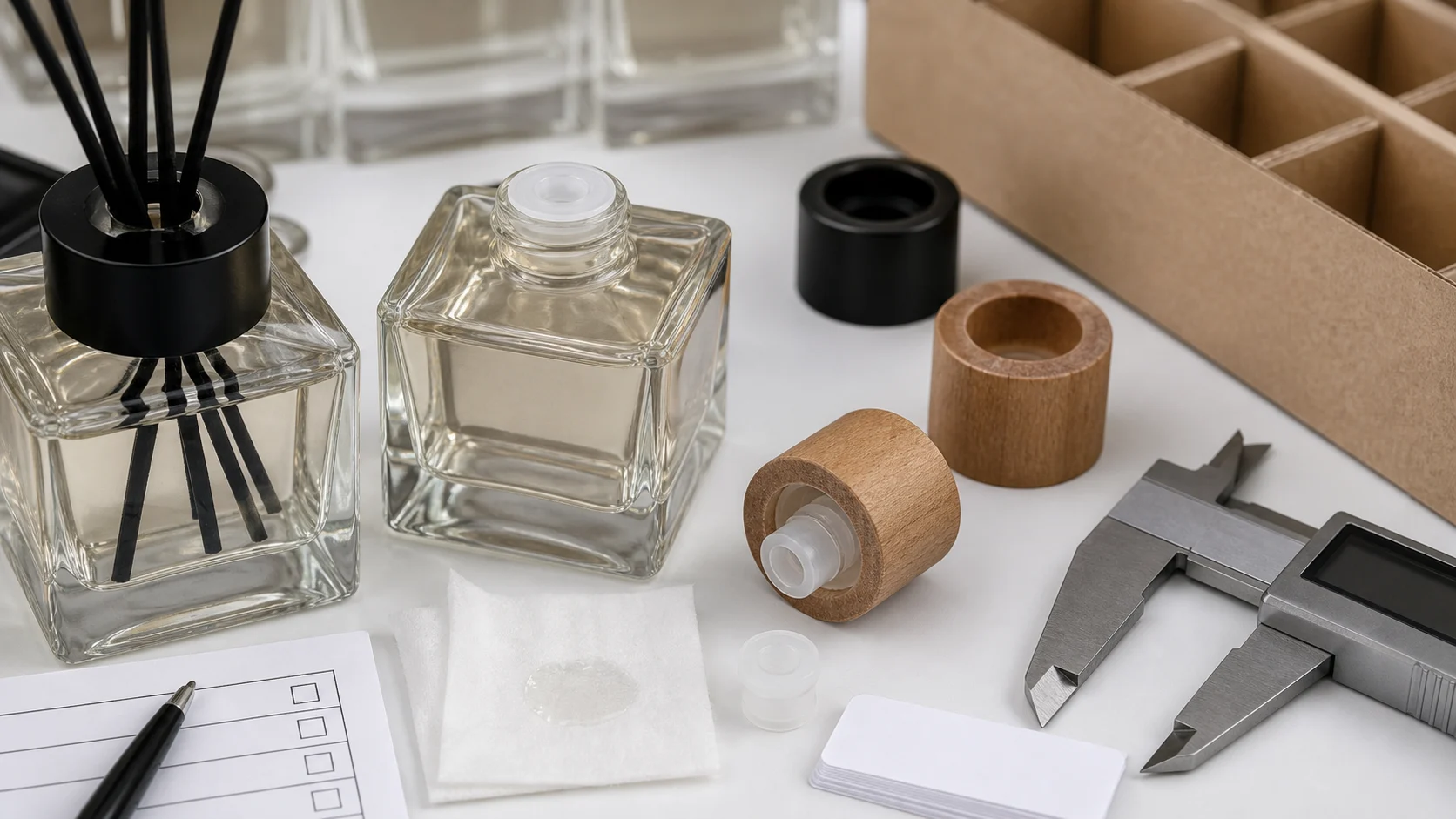
Cap pressure and decorative collars
The cap or decorative collar may help hold the plug, but it can also create pressure that pushes liquid toward the seal. A cap that looks attractive may press the plug unevenly or loosen during vibration. A wooden cap or decorative sleeve may also hide seepage until the carton shows a stain or smell.
Check the sealed bottle after the plug and cap are assembled. Look for cap tilt, uneven gap, plug movement and stains near the neck. If the cap changes color, finish or supplier, confirm whether the pressure on the plug changes as well.
Headspace and fill level
Reed diffuser bottles need enough liquid for the product promise, but overfilling can reduce headspace and increase leakage risk during movement or temperature variation. Purchasing teams should separate nominal capacity from intended fill level and confirm the recommended fill height for the chosen bottle and plug.
Headspace decisions should be made with the supplier or filler. Buyers do not need a universal fill percentage because bottle shape, plug design and formula behavior vary. What matters is that the approved fill level is recorded and repeated in production.
Formula contact with plug and label materials
Fragrance bases can interact with plugs, liners, labels, coatings or cap materials. This may show as swelling, softening, staining, odour transfer, label edge lift or slow seepage. A water-only check may catch obvious assembly problems but may not represent the final liquid.
If the formula cannot be shared with the bottle supplier, purchasing teams should coordinate testing through the filler or brand owner. At minimum, the RFQ should state whether compatibility work is required and who is responsible for approving the final liquid with the plug, cap, label and carton.
Carton pressure and shipping orientation
A sealed bottle can leak if the carton presses on the neck or cap. Dividers should hold the body without forcing the closure. A Diffuser bottle set should leave clearance for decorative caps and collars. If bottles are packed with reeds or accessories, those parts should not push against the sealed neck.
Orientation matters during transport. Even if the outer carton is marked upright, handling may tilt or side-load the shipment. Packed samples should be reviewed in the orientation risk expected for the route. Palletized wholesale shipments and parcel shipments may need different packing assumptions.
Diagnosis sequence when leakage appears
| Symptom | Likely area | Next check |
|---|---|---|
| Wet neck after opening carton | Plug fit or cap pressure | Compare plug model, neck finish and cap gap |
| Fragrance smell but no visible wet bottle | Slow seepage or cap absorption | Inspect cap liner, plug material and carton cell |
| Wet divider near shoulder | Carton pressure or side orientation | Check bottle position and divider contact |
| Label edge lift | Formula contact or abrasion | Review fill process, label material and carton rubbing |
| Only some cartons affected | Packing variation or pallet position | Compare samples from different carton locations |
Arrival inspection
When goods arrive, inspect the outer cartons before opening. Note fragrance smell, wet marks, crushed corners or unusual carton orientation. Pull bottles from different cartons and pallet positions. Photograph stained dividers, wet caps and any bottles that differ from the approved sample.
If leakage appears, separate the evidence before blaming one component. The issue may be plug fit, cap pressure, headspace, formula contact, carton pressure or shipping orientation. A clear diagnosis gives the supplier a fair chance to correct the correct part of the system.
RFQ wording to prevent leakage
With Design & Development support, the RFQ should state whether the diffuser ships filled or empty, intended fill level, fragrance base category if shareable, neck finish, plug model, cap or collar type, reed packing method, carton structure, shipping route and sample deadline. Ask the supplier to identify which leakage checks are included and which are excluded.
Supplier questions that reveal the weak point
Ask the supplier which plug was used in the packed sample, whether the plug is stocked regularly, whether the cap or collar presses on the plug, and whether the carton holds the bottle body or the neck. Ask whether filled samples have been checked with a liquid similar to the final formula. If the supplier cannot answer these questions, the shipment may still be relying on empty-bottle approval.
For accessory-heavy reed diffusers, ask how reeds, caps, collars and inserts are arranged in the carton. Accessories should not press against the sealed neck or force bottles into a tilted position. If a gift box is used, request photos of the inner tray with the bottle installed, not only the closed retail box. The attractive pack must also work as a transport pack.
Corrective actions by root cause
If the root cause is plug fit, the answer may be a different plug material, insertion depth, neck check or supplier-controlled plug model. If the cause is cap pressure, the cap height, inner shape or collar design may need adjustment. If the cause is fill level, the buyer and filler should confirm a repeatable fill height. If the cause is formula contact, compatibility checks must include the real liquid or an agreed representative liquid.
If the cause is carton pressure, change the divider, insert, bottle orientation or accessory position before changing the bottle. If leakage appears only after arrival, improve incoming inspection records so the next shipment can be compared against the same evidence. The goal is to correct the system, not only replace the most visible component.
Approval before repeat shipment
After a leakage correction, repeat the check on the corrected assembly rather than relying on a component promise. Review the filled bottle, plug, cap or collar, carton and accessory layout together. If only the carton changed, confirm that the new carton no longer pushes the neck. If only the plug changed, confirm that the cap and decorative collar still sit correctly.
Keep photos of the corrected pack for incoming inspection. Reorders should match the corrected assembly, not the earlier leaking sample. This makes the improvement visible to purchasing, warehouse and supplier teams.
The final approval should be based on a filled, capped and packed reed diffuser sample. That is the most reliable way to prevent shipping leakage without repeating a broad generic leakage checklist.
 Scan WhatsApp
+86 173 6846 7899